
Shaping a Scalable
Digital Surgery Ecosystem
Bringing devices, data, and partners together in a healthcare ecosystem
Role:
Service Designer
Industry:
Health
Timeline:
Nov 2019 -
Mar 2020
Client:
Johnson & Johnson
Overview
After acquiring several health-tech startups, Johnson & Johnson faced a new challenge: transforming a growing portfolio of digital surgery products into a cohesive service ecosystem.
This project focused on designing how devices, data, platforms, and partners could work together through a shared digital surgery platform. Using service design, we aligned stakeholders around a future-state vision and translated strategy into tangible artifacts that enabled clarity, scale, and collaboration.
Team:
1 Tech Innovation Manager
1 Business Analyst
1 Service Designer
Tools:
Sketch / InVision
Miro/Mural
Illustrator
Outcomes
A clear digital surgery ecosystem model and value propositions
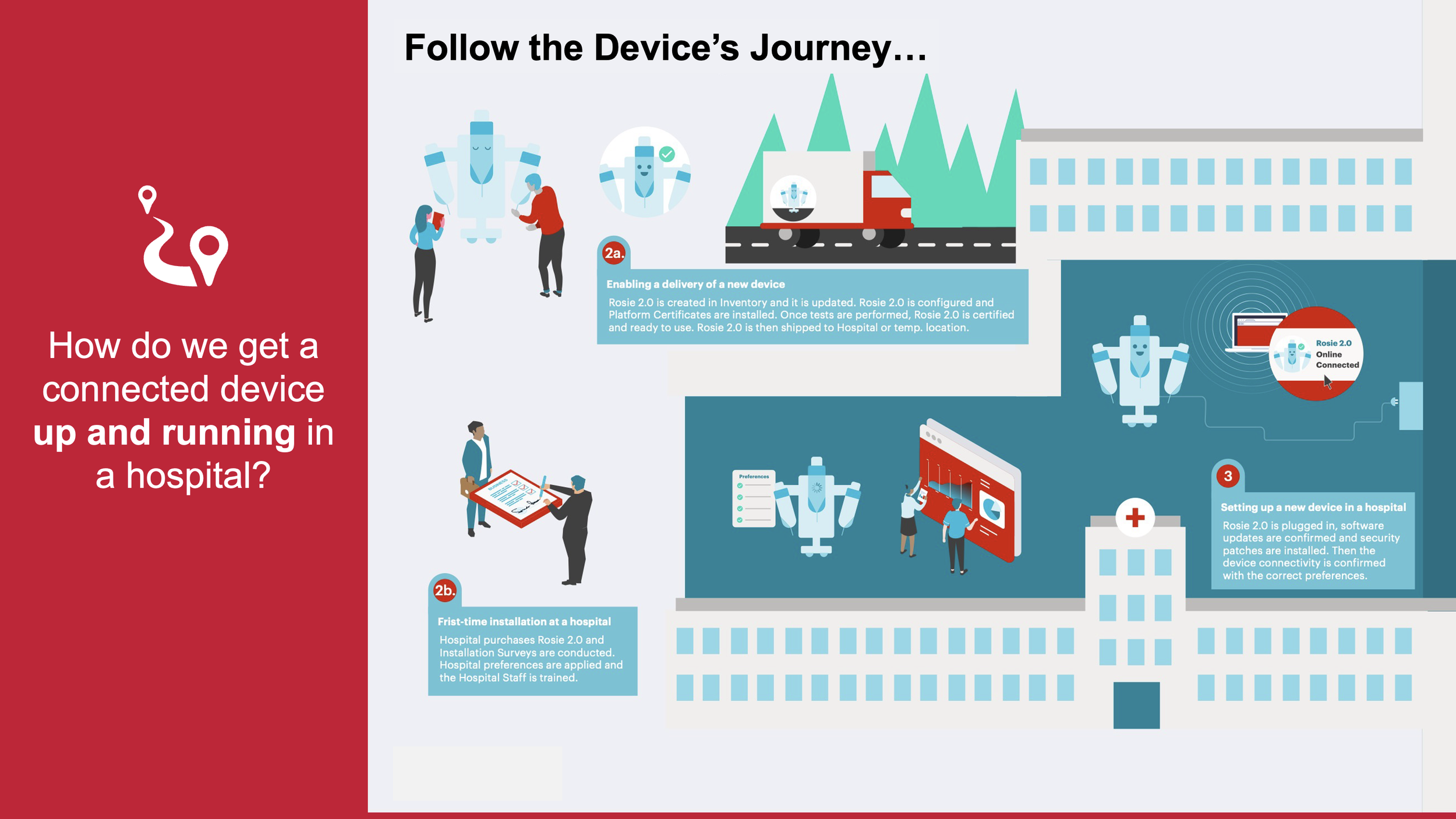
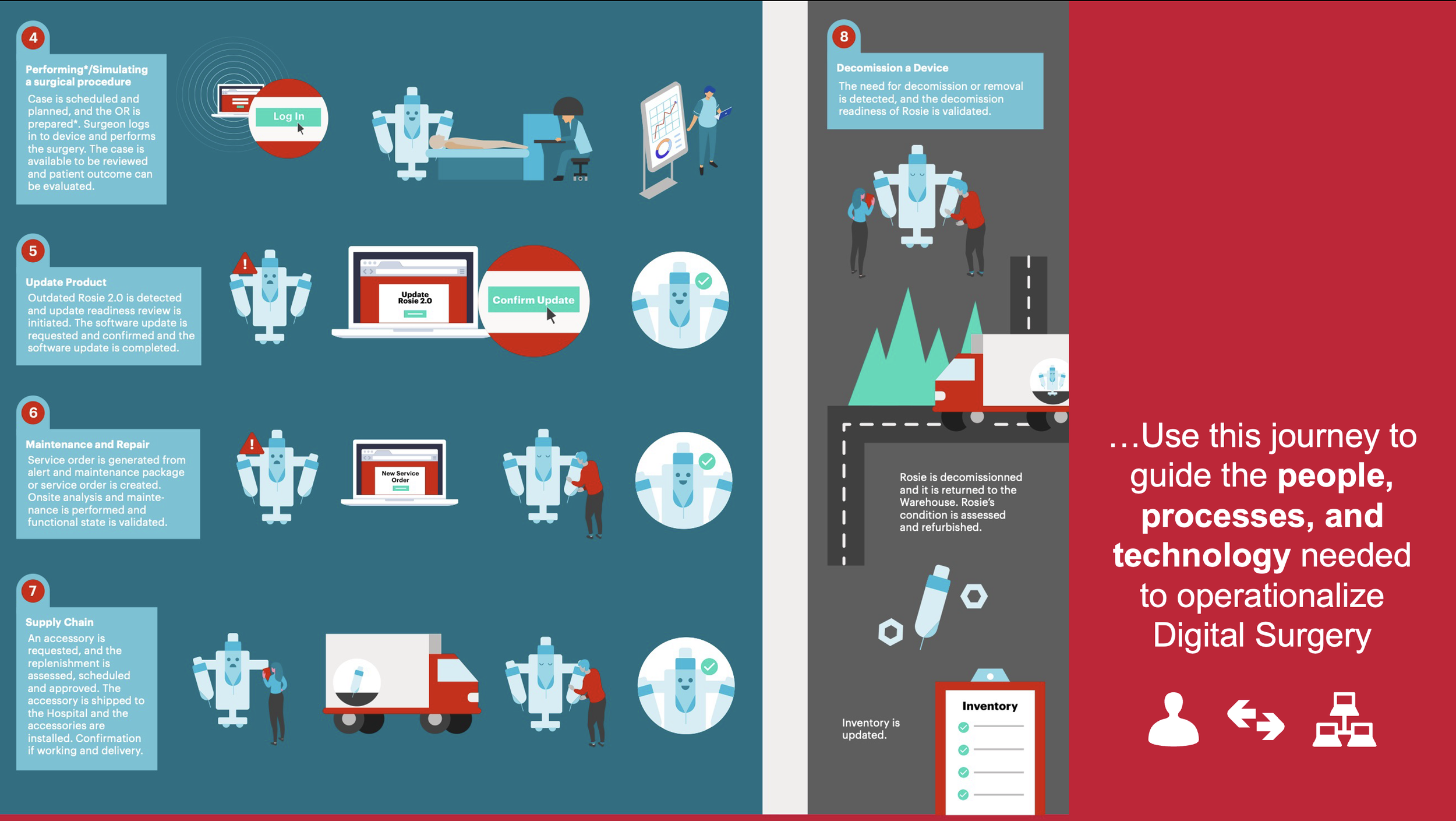
An end-to-end device installation journey
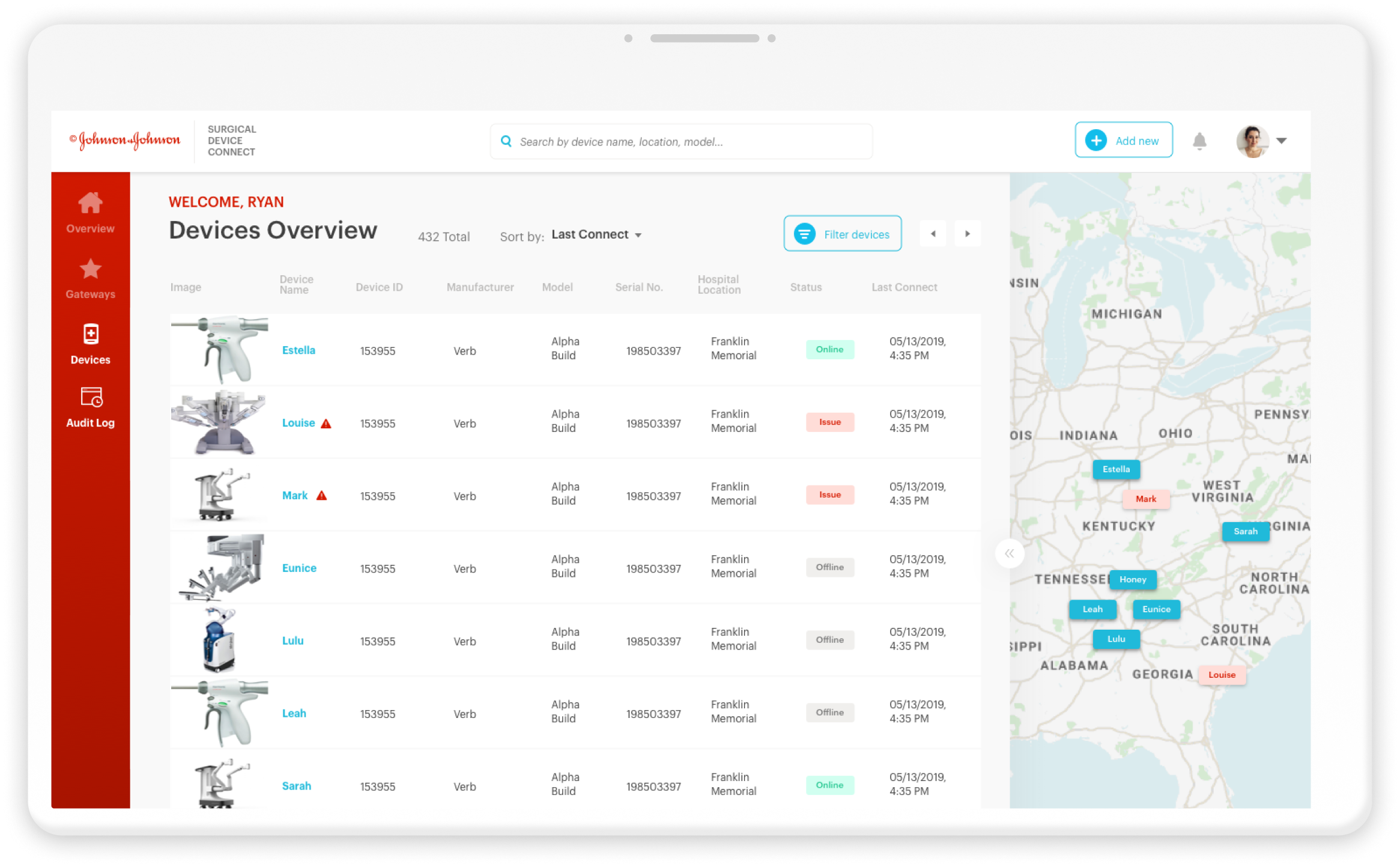
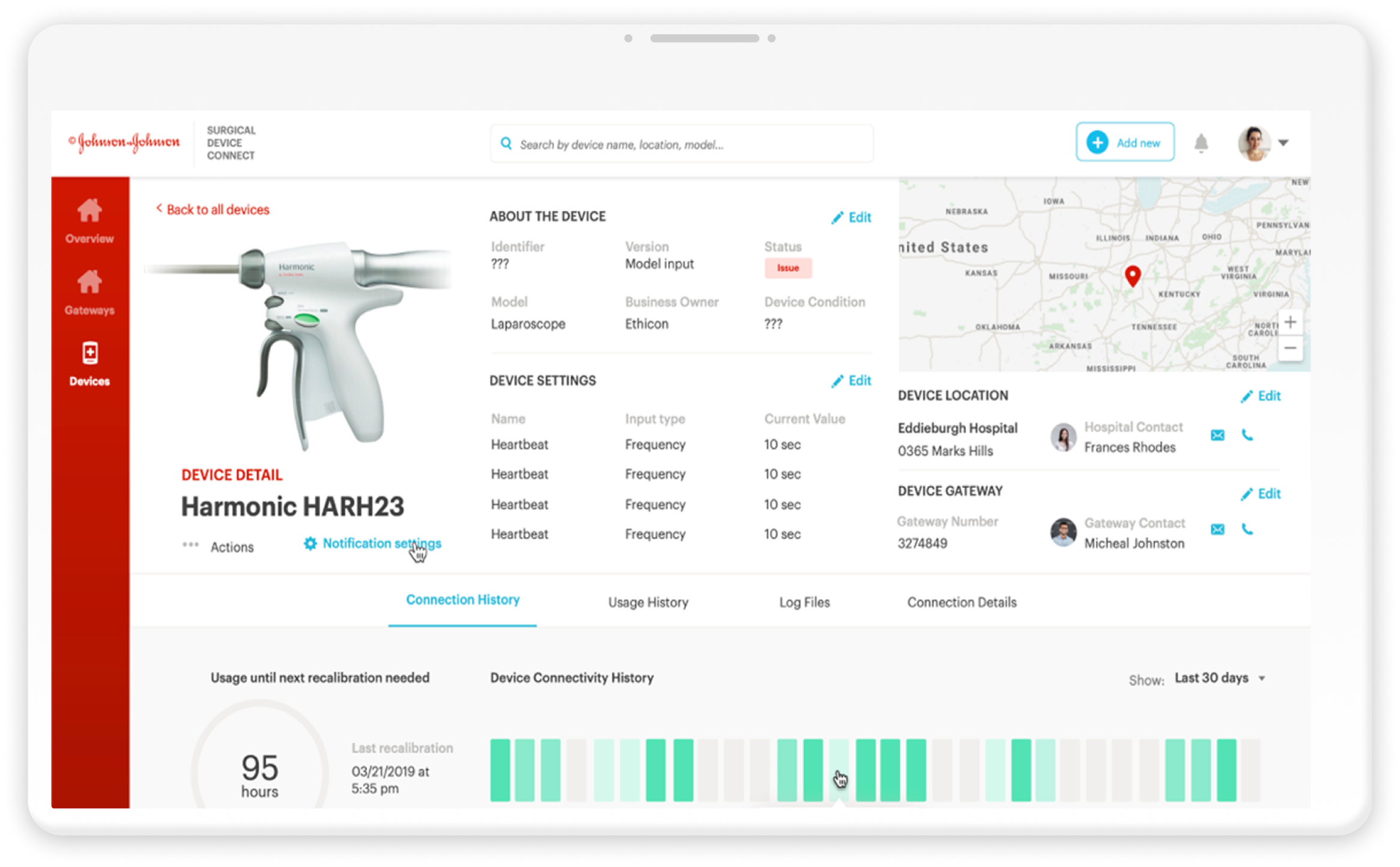
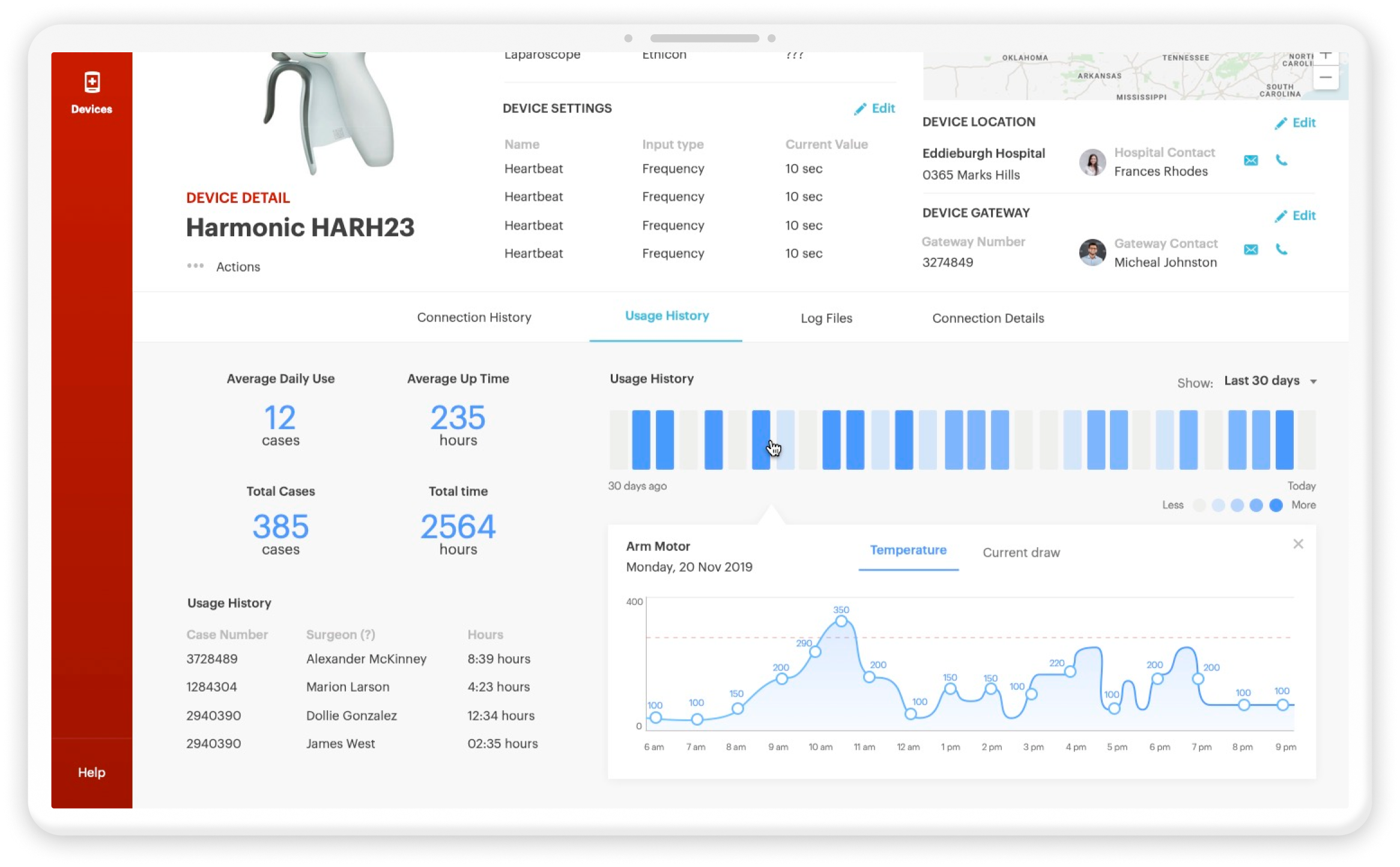
A platform UI proof of concept to align stakeholders
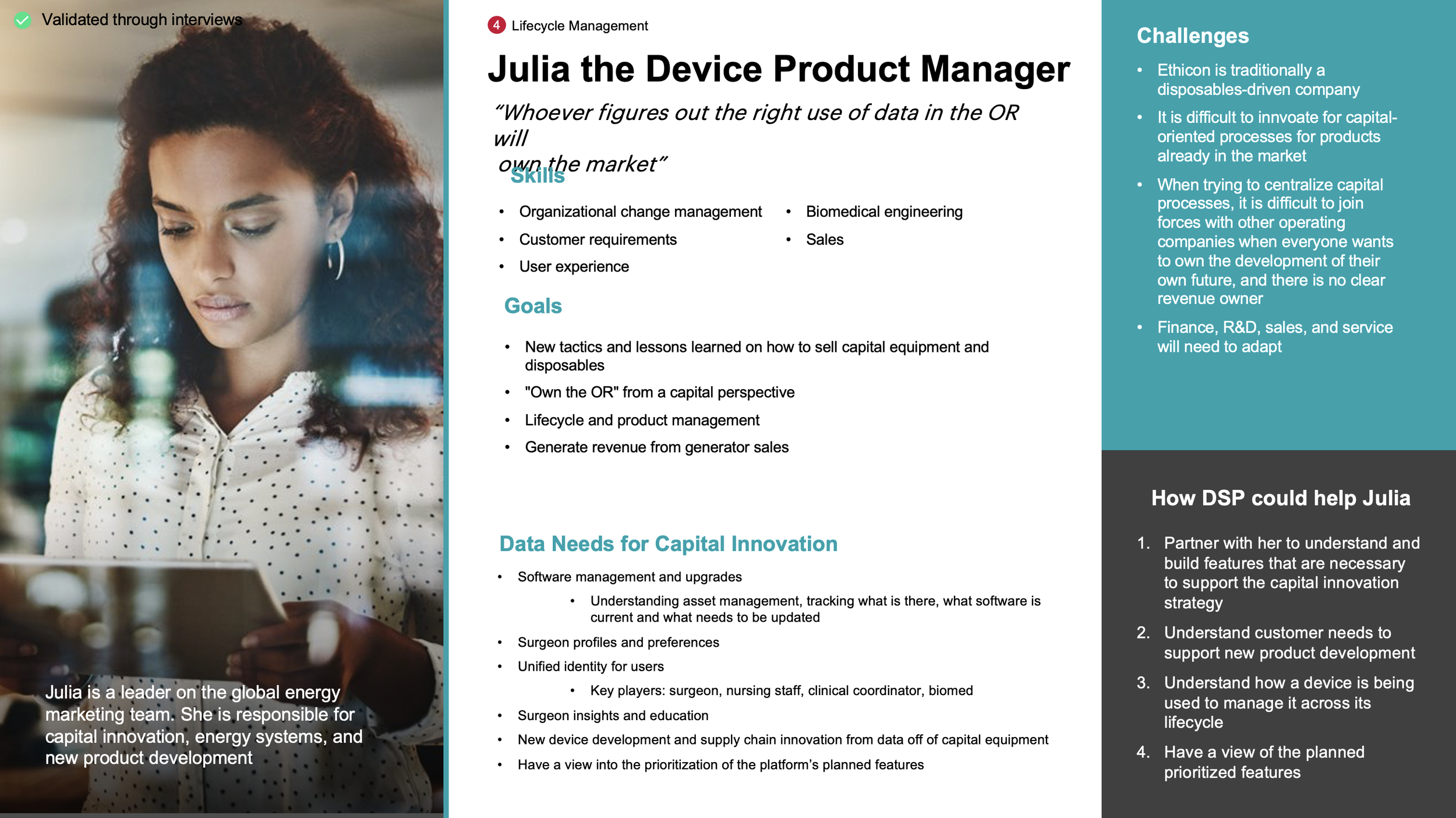
Validated personas across key roles
Challenge
Johnson & Johnson had recently acquired multiple digital health startups related to surgery. While each product brought strong capabilities, they operated in silos across teams, platforms, and experiences.
The key challenge was to define how these products, services, partners, and data should work together as a single digital surgery ecosystem one that could scale, align stakeholders, and unlock long-term value beyond individual solutions.
From acquisitions to a coherent ecosystem
How I contributed
I worked as a Service Designer, helping bridge strategy, user needs, and system design across a complex digital surgery ecosystem.
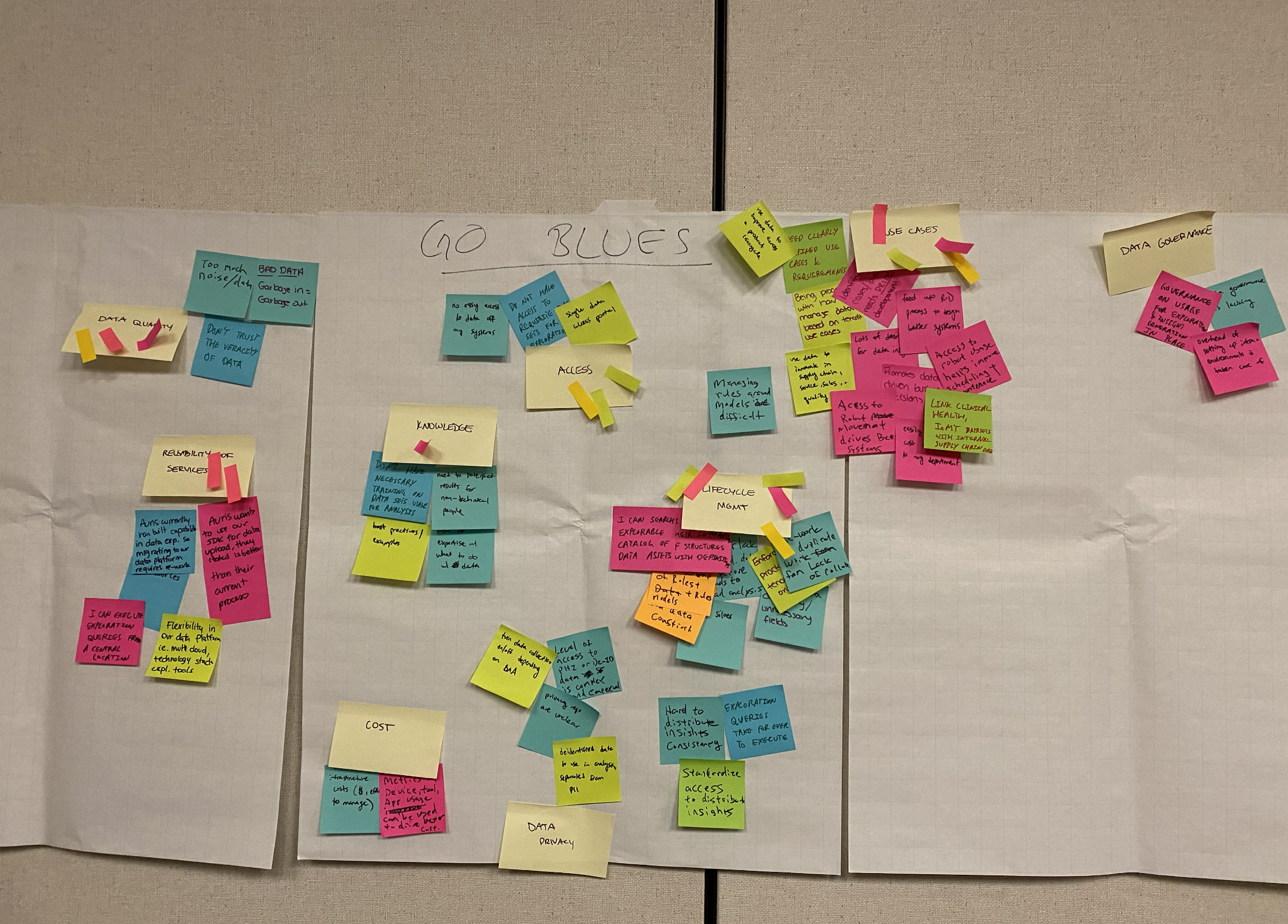
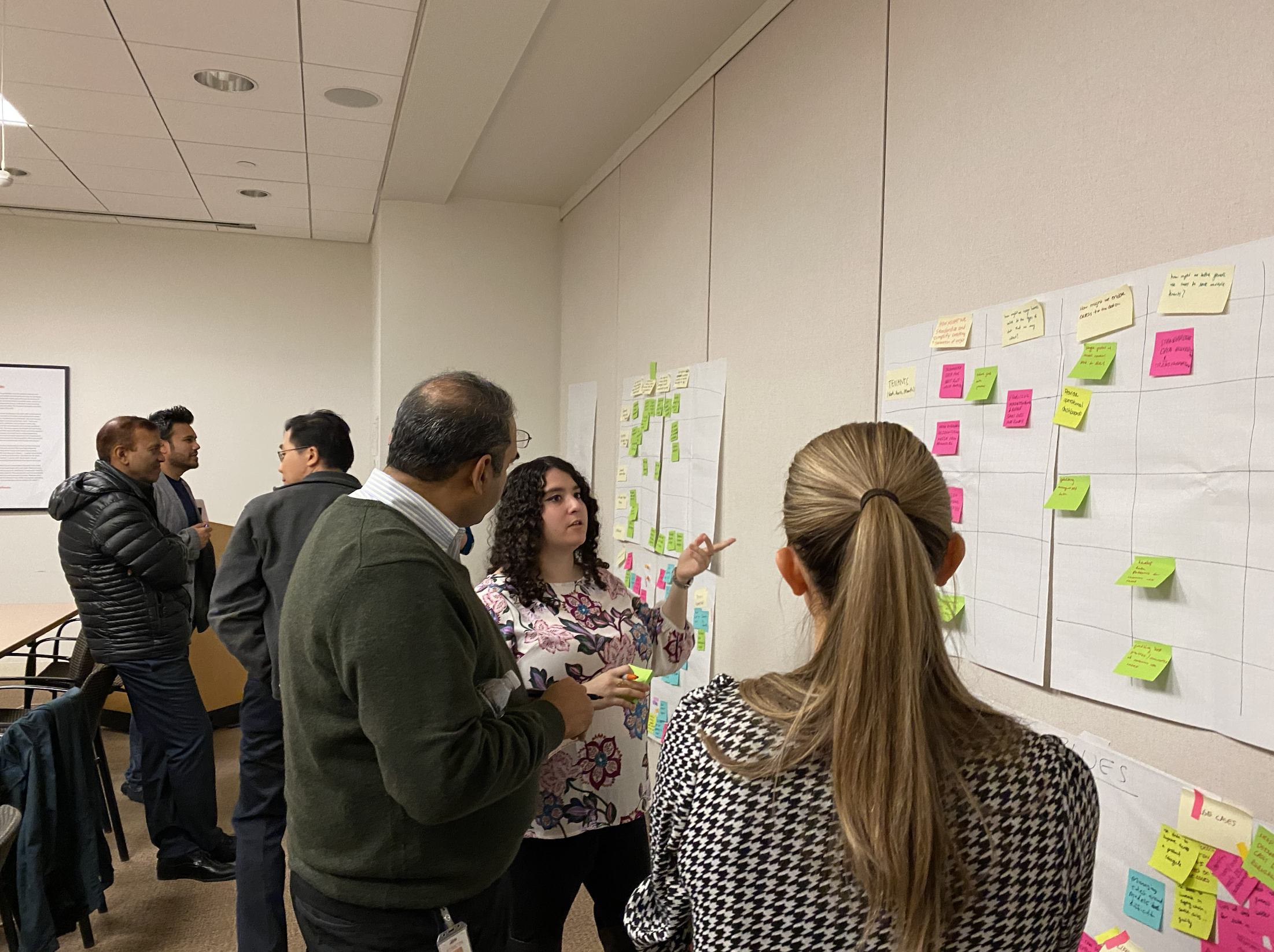
Facilitated on-site and remote co-creation workshops with stakeholders and partners.
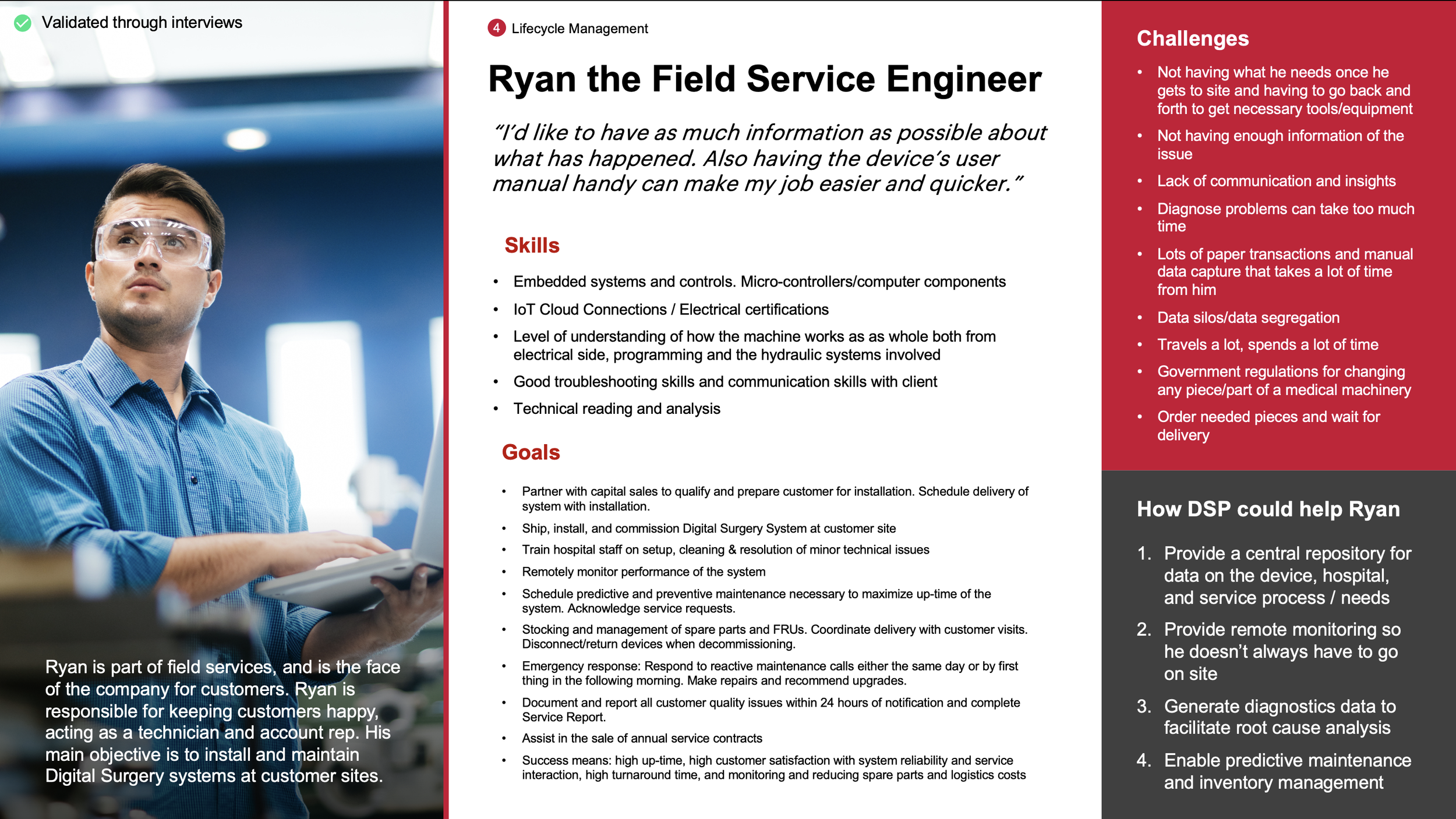
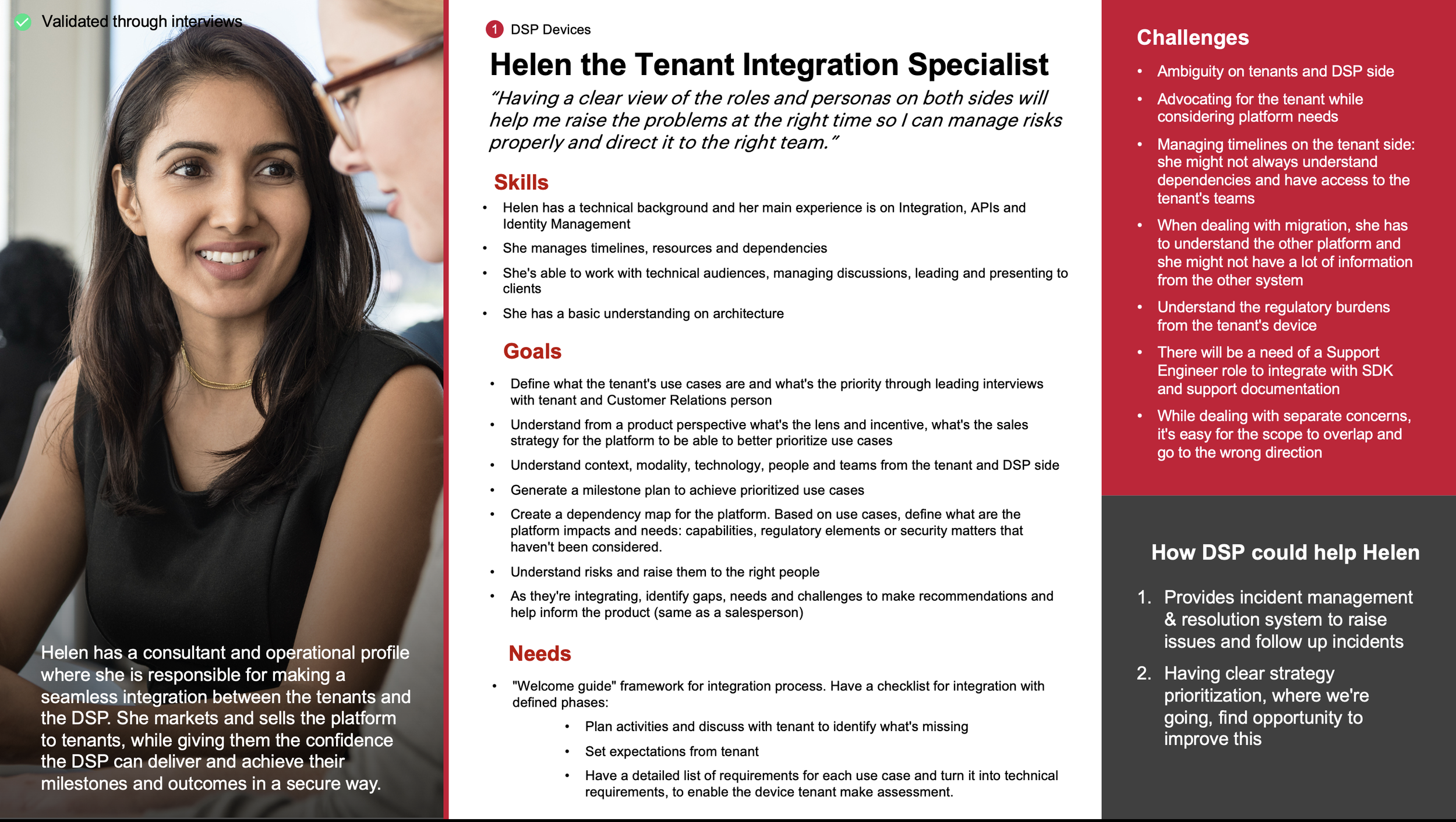
Synthesized research to identify and define key user roles across the ecosystem.
Created and validated proto-personas and personas.
Mapped end-to-end service and device journeys.
Translated insights into clear, actionable artifacts to support alignment and buy-in.
Proto persona initial template
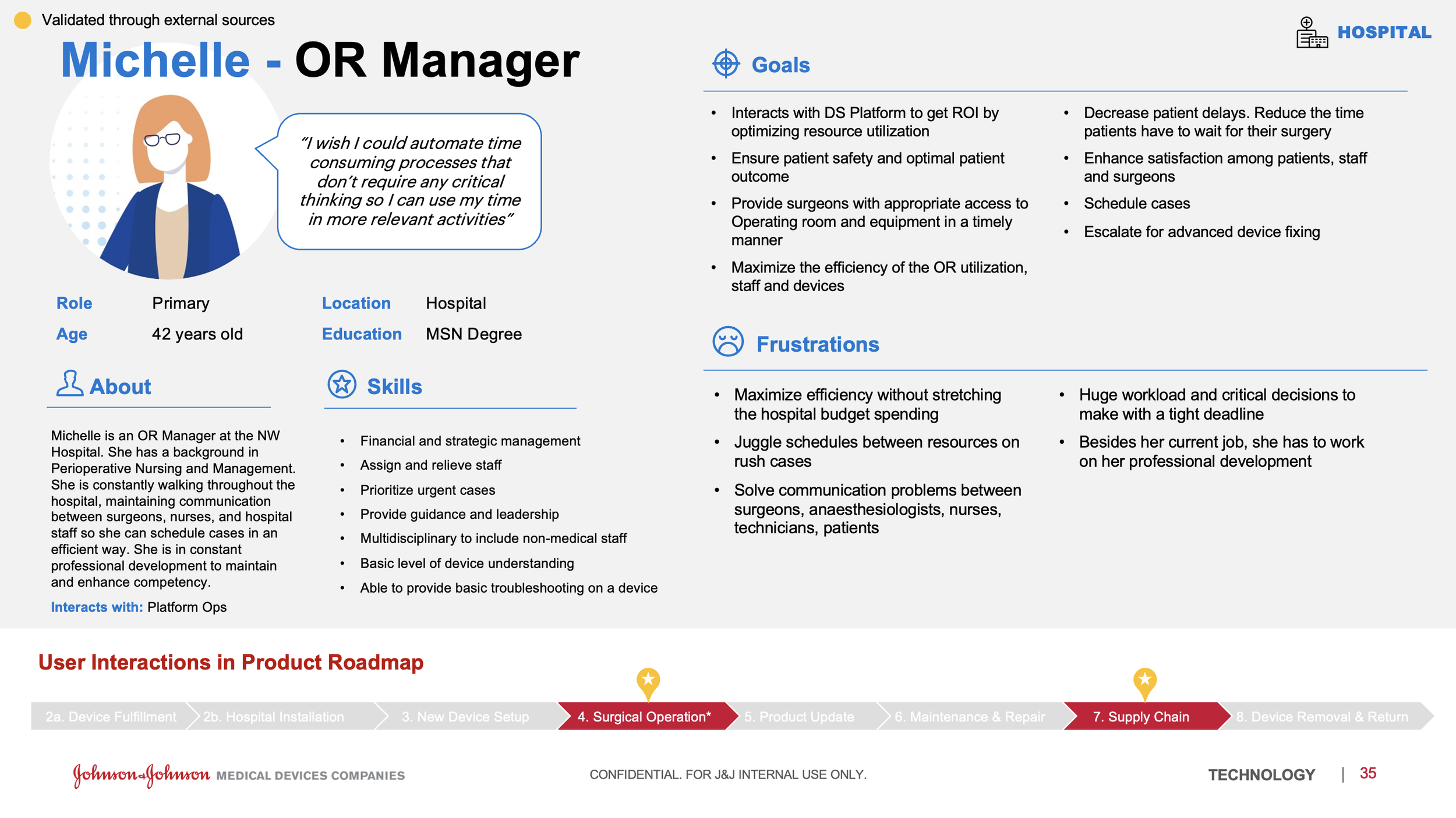
Personas - Validated Information
Designing Shared Understanding
A key part of the work was creating a shared understanding of the ecosystem across business, technology, and design teams.
We:
Identified ecosystem participants and their interdependent value propositions
Established foundational design principles such as scalability, speed, and data leverage
Used personas and journeys to ground strategic discussions in real user needs
Created visual artifacts that helped teams see the ecosystem as a connected system
Shaping product experience
To make the ecosystem tangible, we designed a proof of concept for both the service and the platform experience.
This included:
A device installation journey illustrating actions, roles, and touchpoints inside hospitals
A platform UI PoC covering login, device management, device details, and notification settings
Close collaboration with the client design team to define new UI elements where needed
The PoC helped stakeholders visualize how the ecosystem would operate in practice and was used to communicate the vision, feasibility, and potential value of the platform.
Key Takeaways
This project reinforced how service design creates bridges between silos by enabling shared understanding across complex systems. Looking at the ecosystem end to end helped teams align early and move forward with more clarity and confidence.
It also highlighted the importance of service design in the early stages of product and platform work, where defining users, journeys, and system relationships can significantly reduce ambiguity later on.
Given the scale of the ecosystem, the project underscored the value of collaborative design teams. While I partnered closely with a Business Analyst, having additional design support would have enabled deeper exploration and broader impact across the system.