Improving IT Support through Closed -Loop Feedback
Redesigning how user feedback
was collected, interpreted, and
acted upon within an enterprise
IT Support ecosystem
Role:
Service Designer
Industry:
Technology
Client:
Accenture
Timeline:
2024
Overview
Accenture supports hundreds of thousands of employees globally. At the time of this project, much of the workforce was operating remotely, making internal digital tools and the IT Support team essential to everyday work.
Although feedback was being collected at multiple points in the IT support journey, there was no clear system to turn those insights into action. Feedback was fragmented, ownership was unclear, and improvements were not always visible to employees.
This project focused on designing a closed-loop feedback system that allowed IT teams to respond quickly to user needs while enabling continuous, long-term improvements to the digital employee experience.
Team:
1 Product Design Manager
1 Service Designer
1 PM
Tools:
Figma
FigJam
Jira
Qualtrics
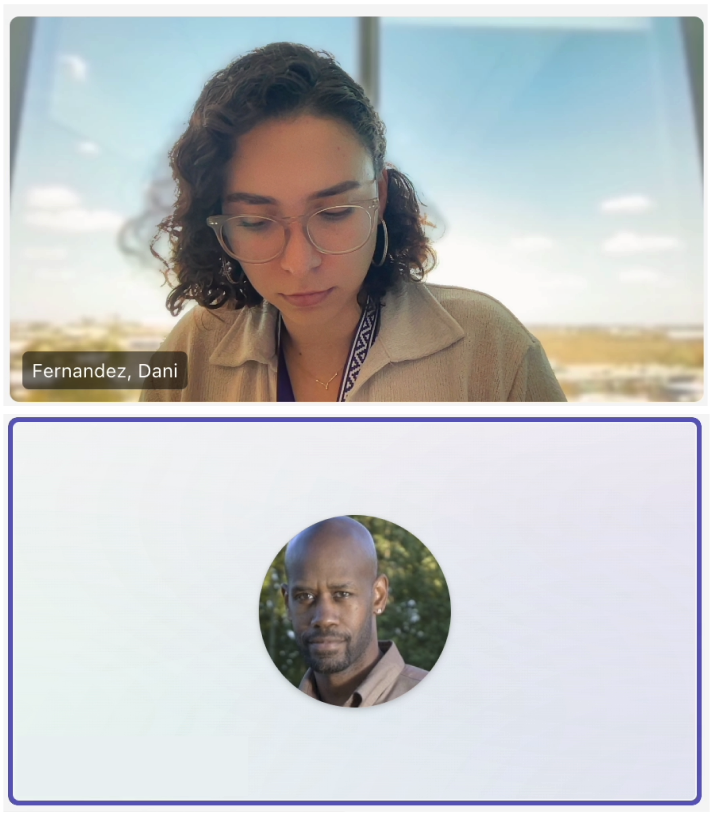
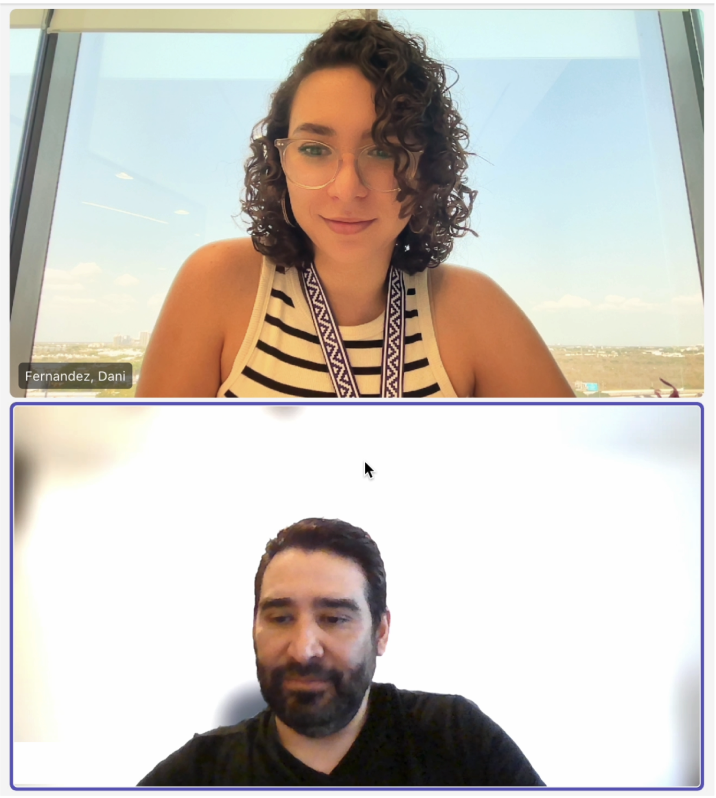
These images capture user interviews conducted with product owners to understand their knowledge about feedback, how they gather it, and what actions they take based on it.
Outcomes
defined feedback ownership
clear accountability
per team
actionable insights visibility
dashboards by region, product
& device
↓ redundant feedback touchpoints
↓ feedback
cycle time
clearer signals, higher quality input
from collection
to action
Challenge
Feedback existed, but impact didn’t
Key challenges included:
Redundant and scattered feedback touchpoints
Questions that didn’t generate actionable insights
Lack of clarity around feedback ownership
Insights being stored, but not systematically analyzed or acted upon
This created friction for both employees who didn’t see change and IT teams who lacked a clear path from insight to action.
How I contributed
I owned the service design work that helped transform fragmented feedback collection into a structured, closed-loop system.
My contribution focused on understanding how feedback was actually experienced and used by local IT teams, and translating those insights into a clearer, more actionable feedback strategy. This included mapping the feedback journey, conducting user research with IT stakeholders, synthesizing insights, and collaborating closely with Qualtrics to evolve their existing feedback approach for Accenture.
Designing Shared Understanding
To create alignment across teams,
I focused on making the feedback system visible and understandable from end to end.
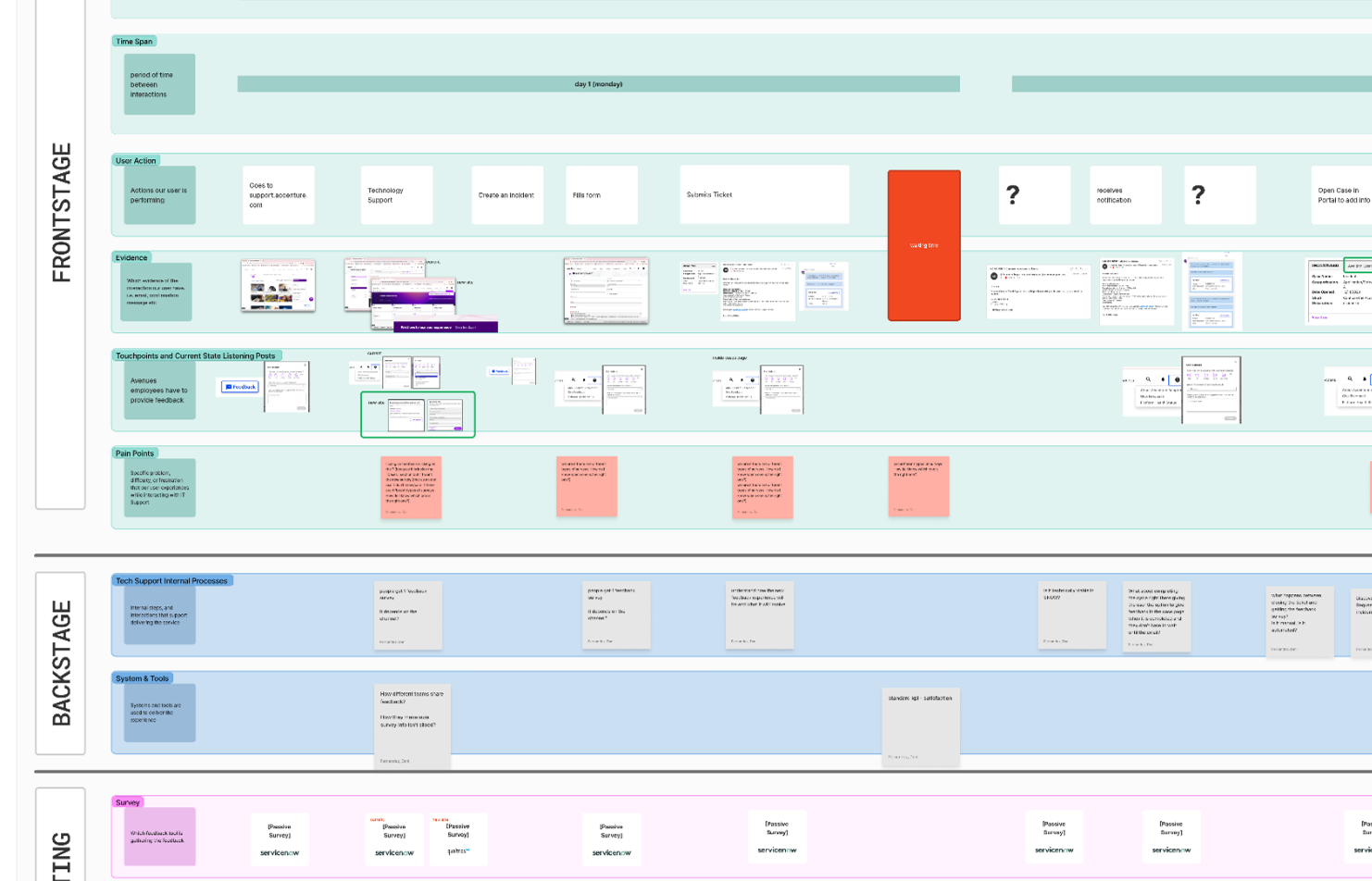
Mapped the IT Support Service Blueprint, with a specific focus on feedback touchpoints and backstage processes
Identified where feedback was collected, where it stalled, and where ownership was unclear
Shared research insights with stakeholders to align on current gaps and opportunities
Insights from research directly informed how the feedback strategy and supporting tools evolved.
Conducted user interviews with local IT teams to understand how they received, interpreted, and acted on feedback
Synthesized findings and shared them with Qualtrics to inform improvements to the feedback model
Collaborated on refining the closed-loop feedback strategy to better support real operational workflows
Shaping product experience
Key Takeaways
This project reinforced the importance of designing systems, not just touchpoints. Feedback alone doesn’t create value what matters is how it’s interpreted, owned, and acted upon. By reframing feedback as a continuous loop rather than a one-time input, we shifted the organization’s mindset from measurement to improvement.
It also highlighted how service design can act as a bridge between user needs, operational constraints, and technology partners creating clarity in complex, multi-stakeholder environments.